
Production Facilities Built Around Your Workflow
Manufacturing Building Construction in Hickory for companies requiring equipment integration and expansion capability
Production equipment determines building layout more than any other factor—crane systems dictate ceiling height and column placement, material flow patterns establish door locations, and utility-intensive machinery requires electrical service and floor loading capacity that standard commercial buildings cannot provide. Building Systems of Catawba County Inc designs manufacturing facilities around these operational realities, constructing buildings where equipment installs efficiently and production flows logically from receiving through shipping. Since 1986, the company has supported industrial growth in the region by delivering structures engineered for workflow efficiency rather than generic warehouse space adapted for manufacturing use.
Butler systems provide clear-span interiors that eliminate mid-floor columns, allowing you to position equipment based on process requirements instead of working around structural supports. Floor slabs are designed for your specific loading conditions—whether that means point loads from heavy machinery, forklift traffic patterns, or chemical resistance for processes involving corrosive materials. Roof structures accommodate crane rails, HVAC ductwork, and utility distribution without requiring supplemental framing added after construction.
Schedule a facility requirements review to evaluate your equipment needs and site conditions in Hickory, Lenoir, Gastonia, and surrounding areas.
How Manufacturing Construction Addresses Operational Demands
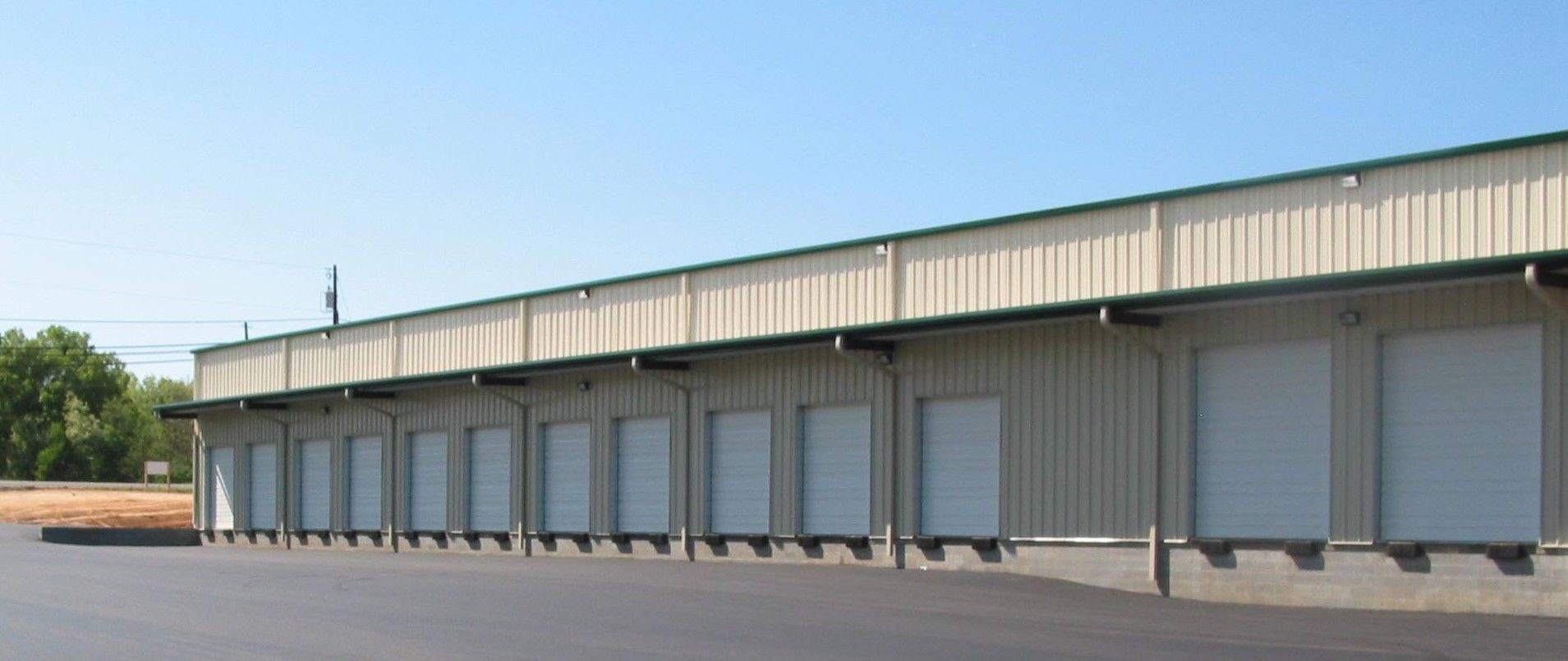
Manufacturing construction involves more than enclosing space—it requires integrating structural capacity, utility infrastructure, and environmental controls that support production activities. Electrical service sizing accounts for equipment startup loads and three-phase power distribution, ventilation systems address heat generation and air quality requirements, and overhead door placement allows truck access for material delivery and finished goods shipping. The building design considers future equipment additions, with electrical panel capacity and floor space that accommodate growth without requiring immediate expansion.
Once operational, your facility functions as designed—crane systems traverse the full building length without obstruction, floor surfaces remain level and intact under repeated forklift traffic, and roof systems keep production areas dry during storms. Overhead doors seal properly to maintain climate control, and the building envelope performs without air infiltration that undermines HVAC efficiency. Production continues without weather-related interruptions or structural limitations that slow workflow.
Expansion capability is built into the initial design through end wall construction that allows lengthening the building and foundation systems that extend to support additional square footage. Regional infrastructure and site conditions are factored into project planning, ensuring efficient execution without unforeseen delays.
What Property Owners Usually Ask
Manufacturing construction involves technical considerations unfamiliar to businesses building their first production facility or expanding operations into owned space.
What makes a manufacturing building different from a standard warehouse?
Manufacturing facilities require heavier floor loading capacity, greater electrical service, process-specific ventilation, and structural provisions for equipment anchoring. Warehouses prioritize storage density and truck access, while manufacturing buildings prioritize workflow and equipment integration.
How do you determine the right building size for production needs?
Building size depends on equipment footprint, material staging areas, workflow distances, forklift maneuvering space, and storage for raw materials and finished goods. We review your production process to calculate space requirements rather than estimating based on square footage alone.
Can the building accommodate overhead cranes or other material handling systems?
Yes. Butler structures are engineered to support crane rails with capacities from one ton to over twenty tons. The structural frame carries crane loads, and runway systems are integrated during construction rather than added later.
What should we know about utility requirements for manufacturing spaces?
Electrical service must be sized for total connected load plus future expansion. Natural gas, compressed air, water supply, and wastewater discharge are coordinated during design so utility infrastructure is in place before equipment installation begins.
How quickly can we occupy the building after construction completes?
Occupancy timing depends on equipment installation and startup schedules. The building structure completes on schedule, but production readiness also requires equipment delivery, installation, utility connections, and commissioning, which you coordinate based on your operational timeline.
Since 1986, Building Systems of Catawba County Inc has delivered manufacturing facilities throughout the region, working with companies to translate production requirements into functional building designs. Call (828) 327-6677 to discuss your facility specifications and project planning timeline.